
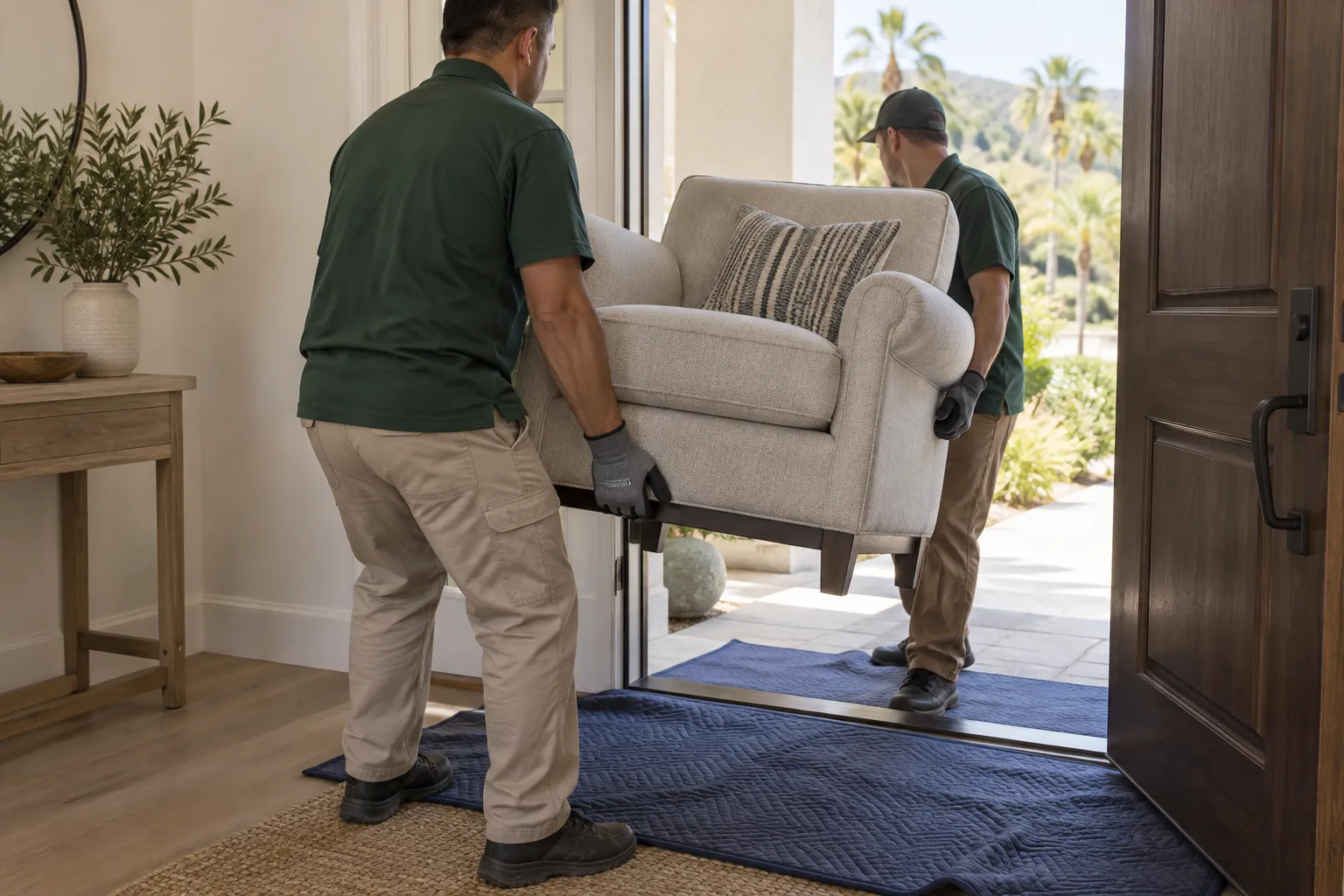
How to Prepare a Sofa for Removal
Measure the route, empty hidden storage, and settle disassembly questions before pickup day.
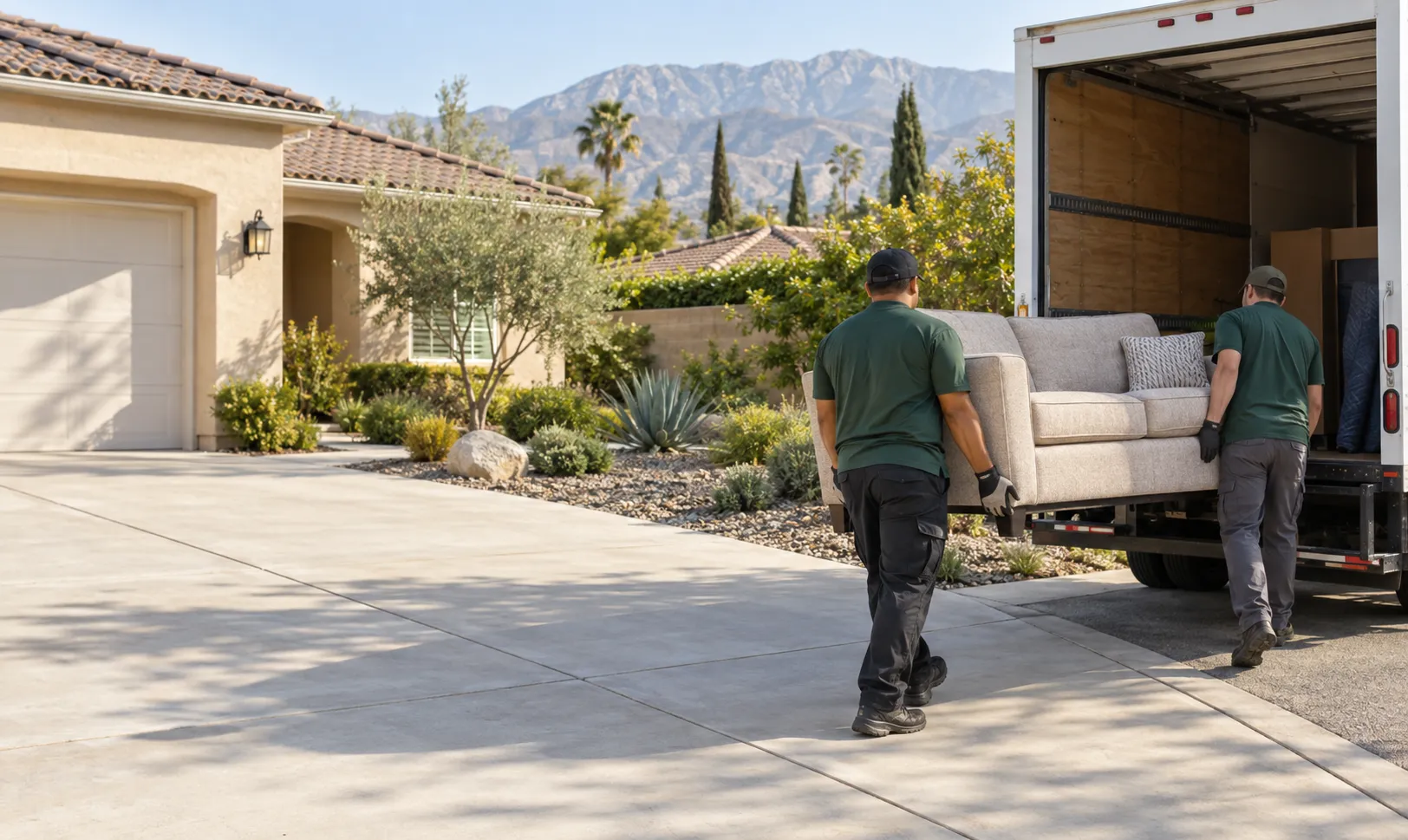
In Redlands, BinBuddy helps you plan removal for household furniture, appliances, stored belongings, and larger cleanout loads. You choose what goes. The crew handles the carrying and loading for approved items.
Each service page explains what to describe, what to separate, and which access details shape the work.
Room-by-room and whole-home removal for approved non-hazardous items.
↗02Planned removal for mixed household contents across one room or the whole home.
↗03Removal for stored belongings, furniture, boxes, and approved garage debris.
↗04Removal planned around stairs, low clearances, stored contents, and heavy basement items.
↗05Removal for stored attic contents where access, headroom, heat, and insulation matter.
↗06Sofas, tables, dressers, bed frames, chairs, and other household furniture.
↗07Household appliance pickup after utilities, contents, and access are confirmed.
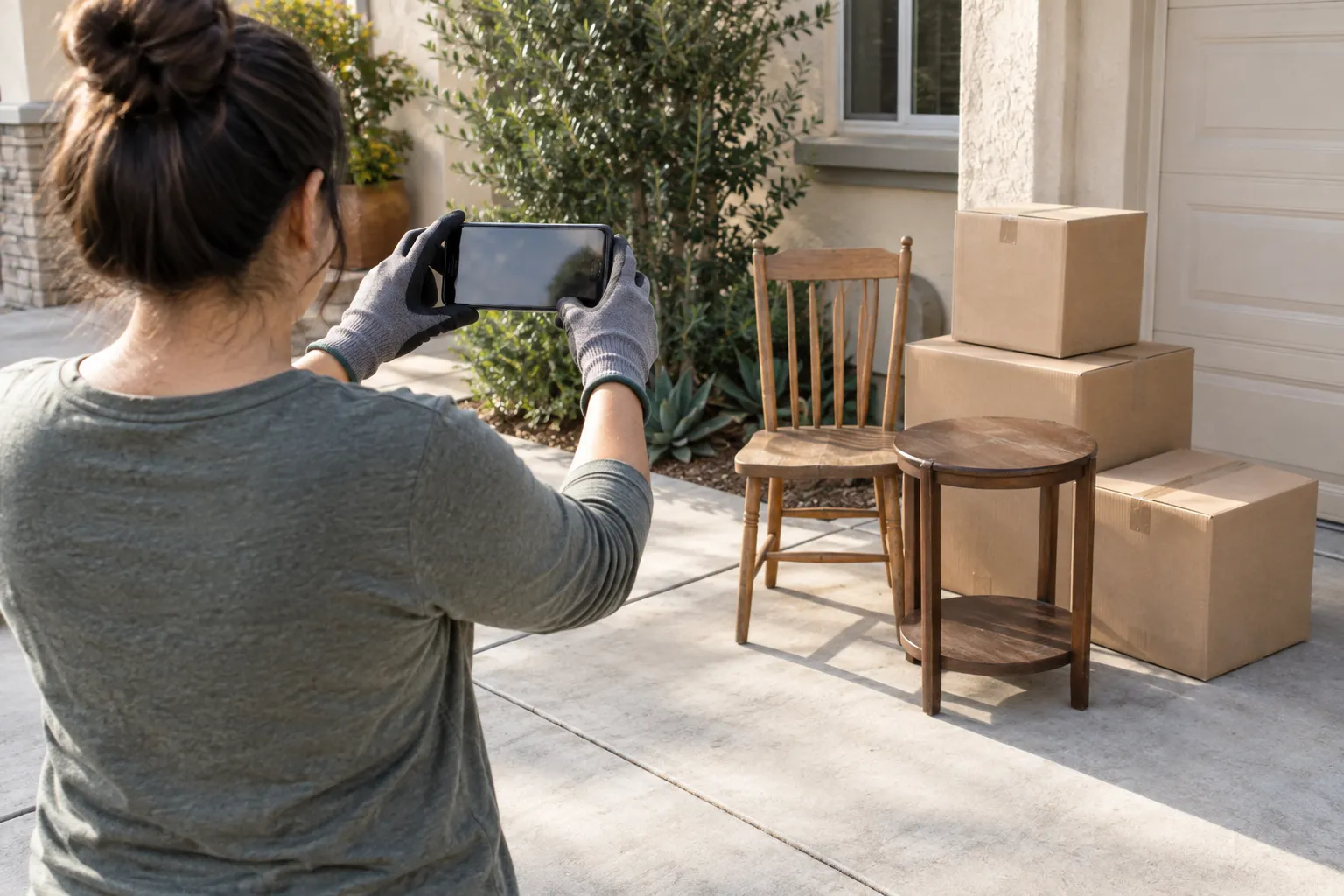
↗A clear item list and honest access notes help the crew understand the job. Photos can add context, but an on-site look is what supports the final quote.
Open the planning checklistName the items, rough quantity, and where they sit in the home.
Note stairs, tight turns, gates, elevators, and the distance to parking.
Protect what stays and keep hazardous or special-disposal material apart.
Confirm the approved load and quote before work begins.
How much truck space the approved load uses.
What the items are made of and where they can legally go.
The carrying route, parking, stairs, gates, and elevators.
Weight, disassembly, sharp edges, glass, or awkward dimensions.
Coverage outside confirmed parent-company markets still needs owner approval before launch.
Measure the route, empty hidden storage, and settle disassembly questions before pickup day.
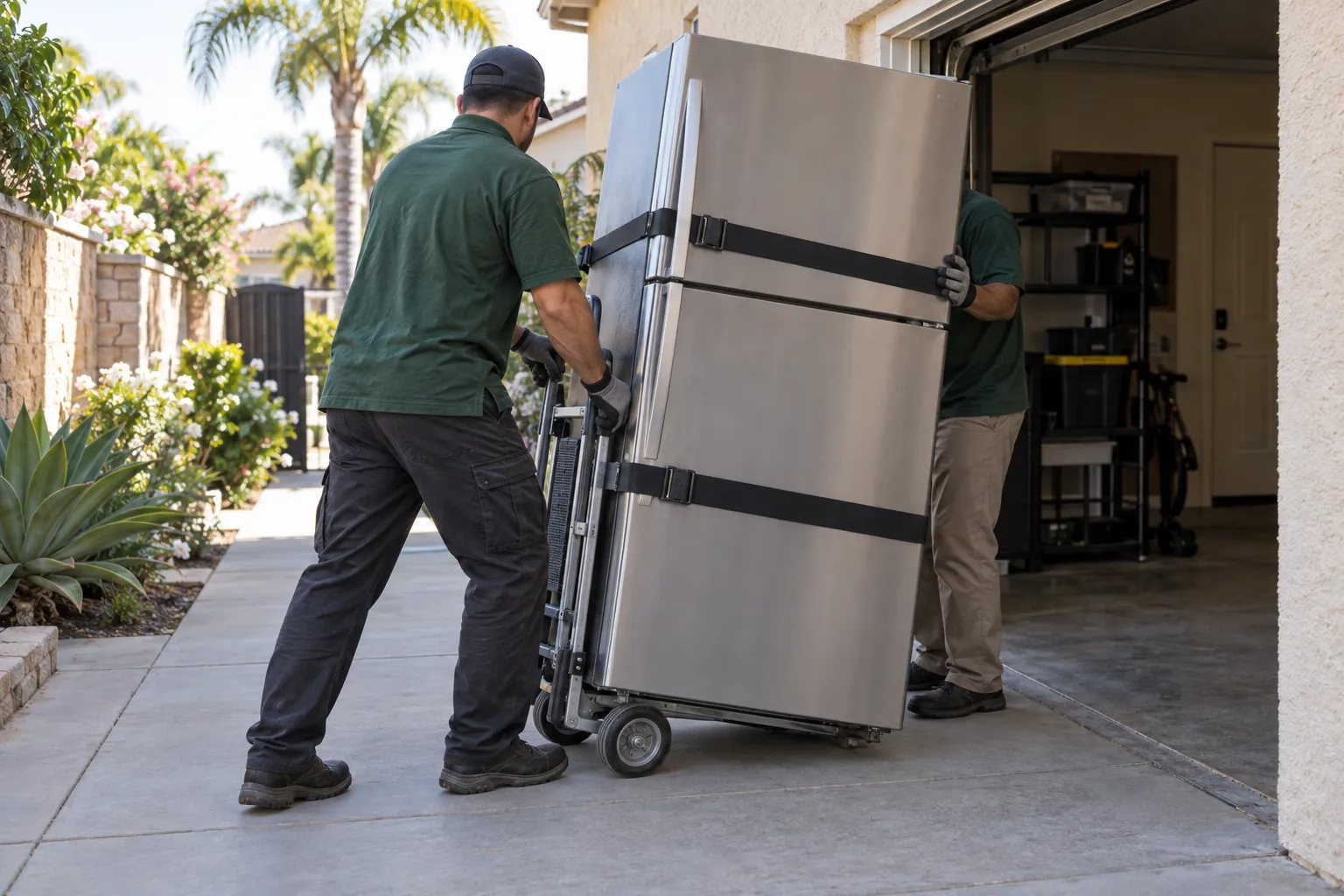
A practical checklist for contents, water, utility connections, dimensions, and access.
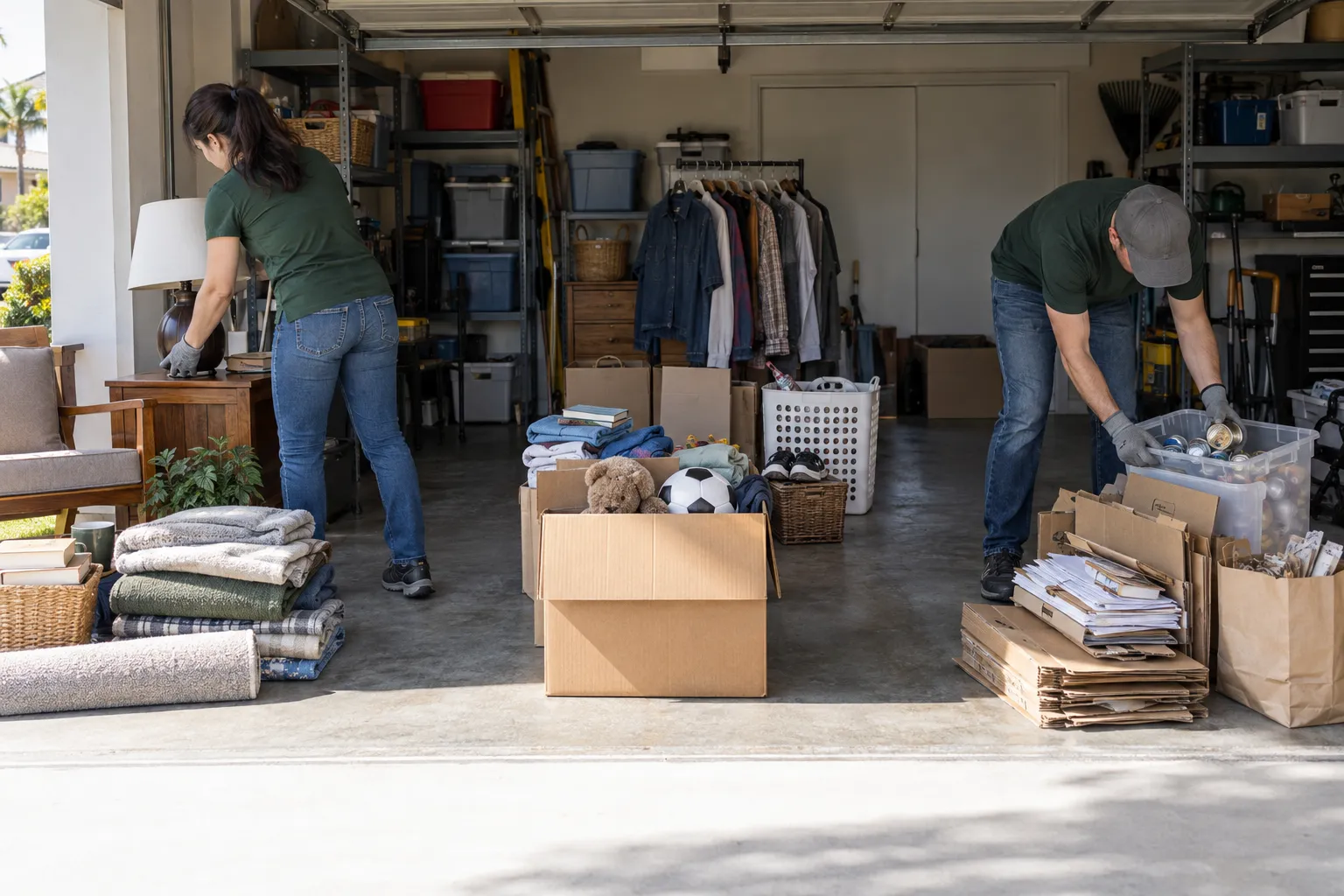
Sort by destination, isolate special-disposal items, and create a clear carrying lane.
Write down the items, their location in the home, and the carrying path. Those details make the first conversation useful.